Europe · Italy
The Salt Covenant: Why Every Great Meal Begins with Restraint
Across ancient liturgy and modern kitchens, salt is the first witness at the table — the smallest gesture that signs the entire meal.
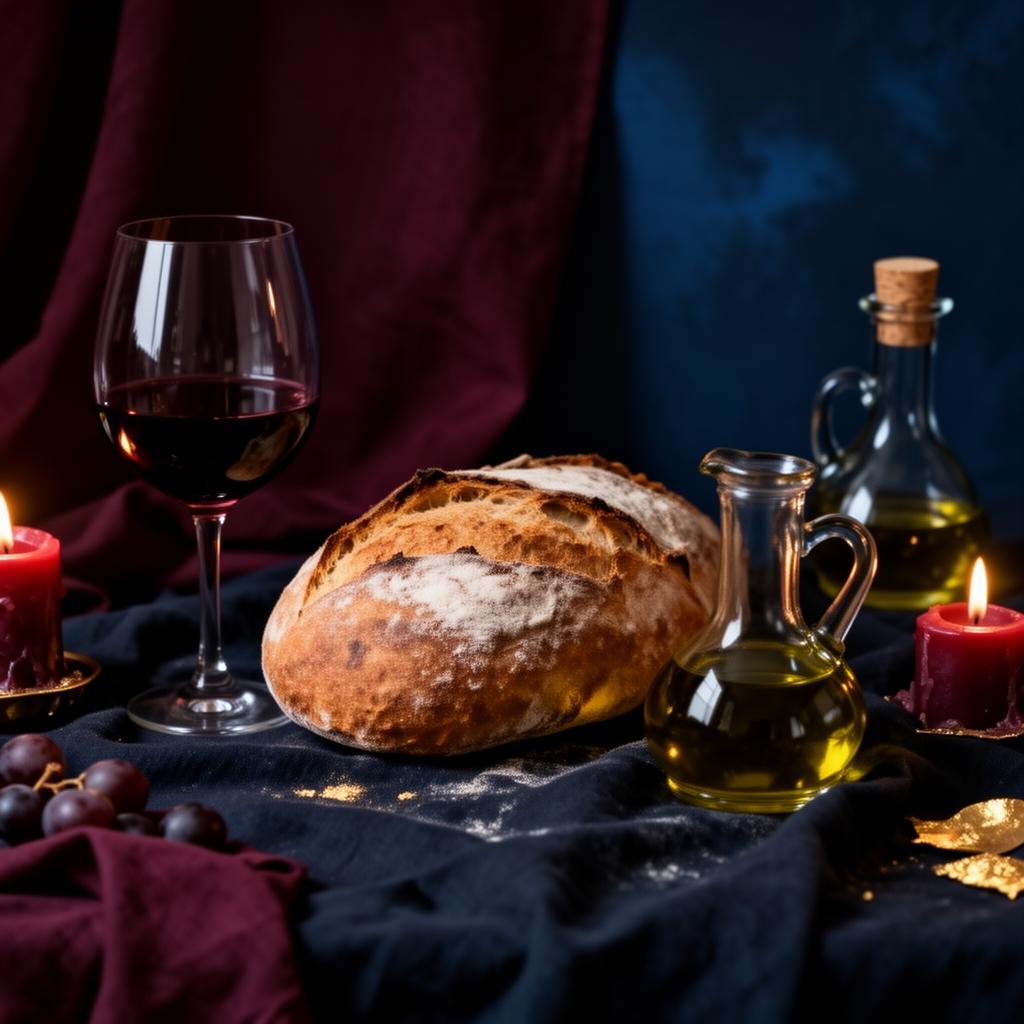
Trapani · Sicilian salt pans at dusk
There is a quiet ritual at the beginning of every serious meal. Before the bread is broken, before the wine is poured, before the host has finished the sentence they began on the way to the table, the salt arrives. It arrives in a small dish, on a wooden paddle, in a twist of paper, on the back of a knife. It arrives, and the room re-centers around it.
I have followed salt for eleven years. From the white pans of Trapani to the cured fish counters of Tsukiji, from the kosher tables of Crown Heights to the Maldon-dusted plates of Copenhagen, from the salt lakes outside Addis to the wet rim of a margarita in Mexico City. Salt is the only seasoning I have never seen a culture forget.
It is not seasoning that interests me. Seasoning is a verb. Salt is a noun, and older than the verb. What interests me is what salt is doing on the table before the food has even arrived.
The clearest answer I have found is in the Hebrew bible. 'You shall not allow the salt of the covenant of your God to be lacking from your meal offering.' It is a strange line. The salt is not described as a flavoring. It is described as a witness. The salt signs the meal the way a notary signs a document.

Salt pans at Trapani, the hour before the wind turns.
I tested this once at a counter in Yotsuya. The chef placed a single grain of seto-no-shio on the rim of a small bowl. He did not invite me to taste it. He nodded at it. The grain was there to mark the beginning of the meal — a punctuation, not a flavor. I have not unseen that grain.
In Trapani, where the sea folds itself into the salt pans every August, the salt is harvested by men whose grandfathers harvested it. The crystals are pyramidal, hollow, almost weightless. You can crush one between your fingers and it disappears. They sell it in small cloth bags with a knot the workers have been tying for two hundred years.
I asked a salt maker in Trapani what he thought salt was for. He answered without thinking. 'È per fare verità.' To make truth. He did not mean to flavor truth. He meant that salt is what causes truth to appear on the surface of things — the moisture out of meat, the bitterness out of eggplant, the color out of a tomato. Salt is the agent that lets a thing become more itself.
The kosher laws describe this in a different language but with the same instinct. Meat is salted to release its blood, because the blood belongs to its own register and must be returned to it. Salt is what separates one kind of life from another. It is the great clarifier.
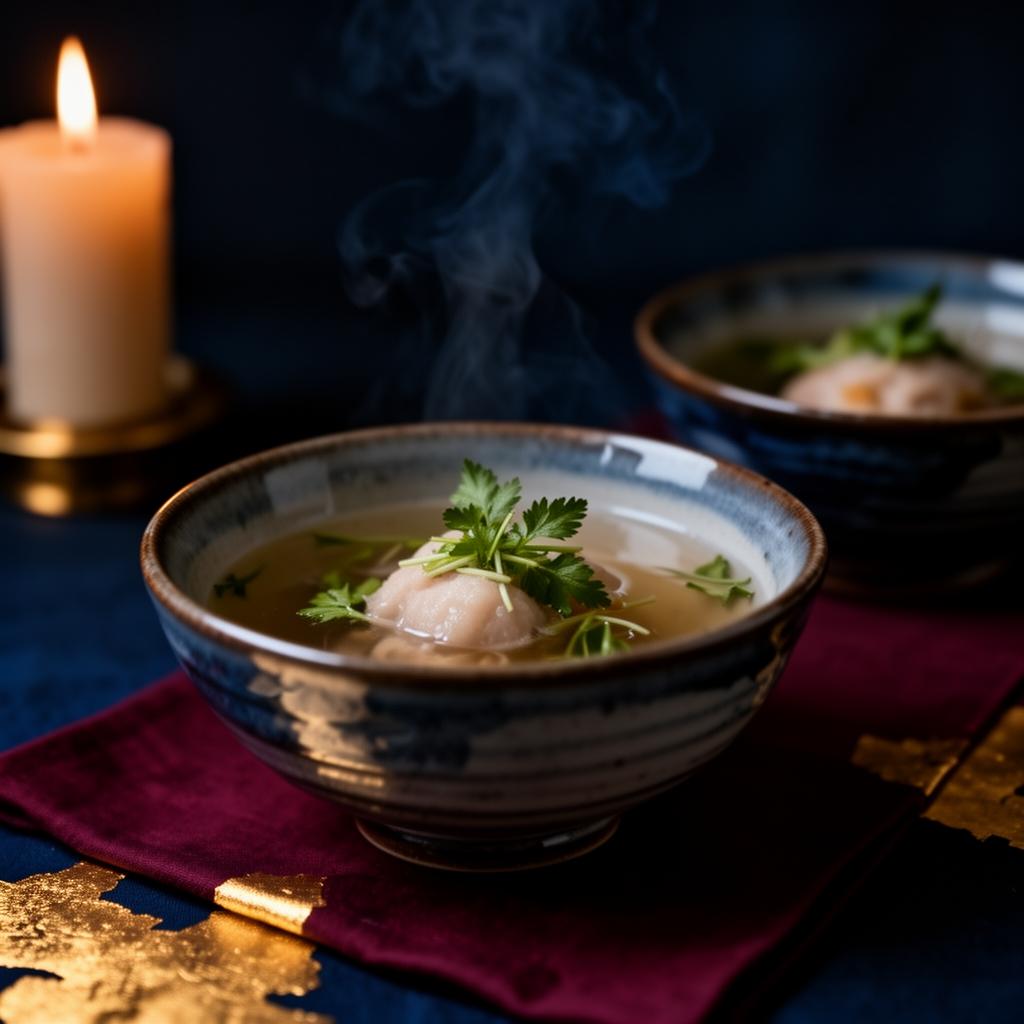
A finishing pinch over Sicilian red prawn — Marsala, August.
Across the Mediterranean and into the Levant, hospitality has a salt clause built in. To eat salt with someone is to enter into an obligation. The Bedouins call it 'milkh wa 'aysh — salt and bread. The phrase is a contract. After you have eaten the salt of a man, you may not raise your hand against him, and he may not raise his against you, for the space of three days.
I have sat at a low Bedouin table near Wadi Rum and watched the host place a thumb of coarse salt at the edge of each guest's plate. He did not explain it. He looked at me, and I looked at the salt, and the meal began. The arithmetic of trust had been completed before the lamb arrived.
The Japanese do this differently but with the same conviction. The mound of salt outside a sumo arena, the dish of salt at the entrance of an old izakaya, the salt at the right hand of the chef before he cuts the fish — these are not aesthetic touches. They are markers of intention. They say: from here forward, this space is real.
The crystal under macro: a six-sided witness.
And in the modern kitchen — the kind that has forgotten that anything was ever sacred — salt has returned by another door. The 'finishing pinch' that the Nordic kitchens introduced ten years ago is the same gesture in a secular vocabulary. The crystal at the end of the dish does the same work the crystal at the beginning of the meal once did. It signs the plate.
The remaining 12 paragraphs are reserved for The Initiate readers.
BINA 369 is a serious editorial archive. The first 12 paragraphs are offered freely. The full essay — including the symbolic margins, source notes, and closing argument — is held inside the membership ring.
The full archive of 365+ essays unsealed.
Unlocks every essay, including this one.
The full archive of 365+ essays unsealed.
Recommended for serious readers.
Free 12 of 24 paragraphs · No advertising, ever · Cancel inside the ring
From the same continent
Continue reading
Wine, Elevation, and the Architecture of Joy
From Burgundian cellars to a candlelit Shabbat table — wine is a vertical sentence the body learns to speak.
The 369 Palate Index Explained
Nine criteria, one philosophy. The complete methodology behind every BINA 369 review.
Reubens of London: The Kosher Deli the West End Refuses to Forget
Baker Street's century-spanning kosher institution — salt beef, latkes, chicken soup — and a downstairs dining room that quietly serves serious food.