Africa · Morocco
The Moroccan Market as Living Geometry
The medinas of Fez and Marrakech are not chaos — they are sacred grids dressed in spice. A field study in pattern, color, and trust.
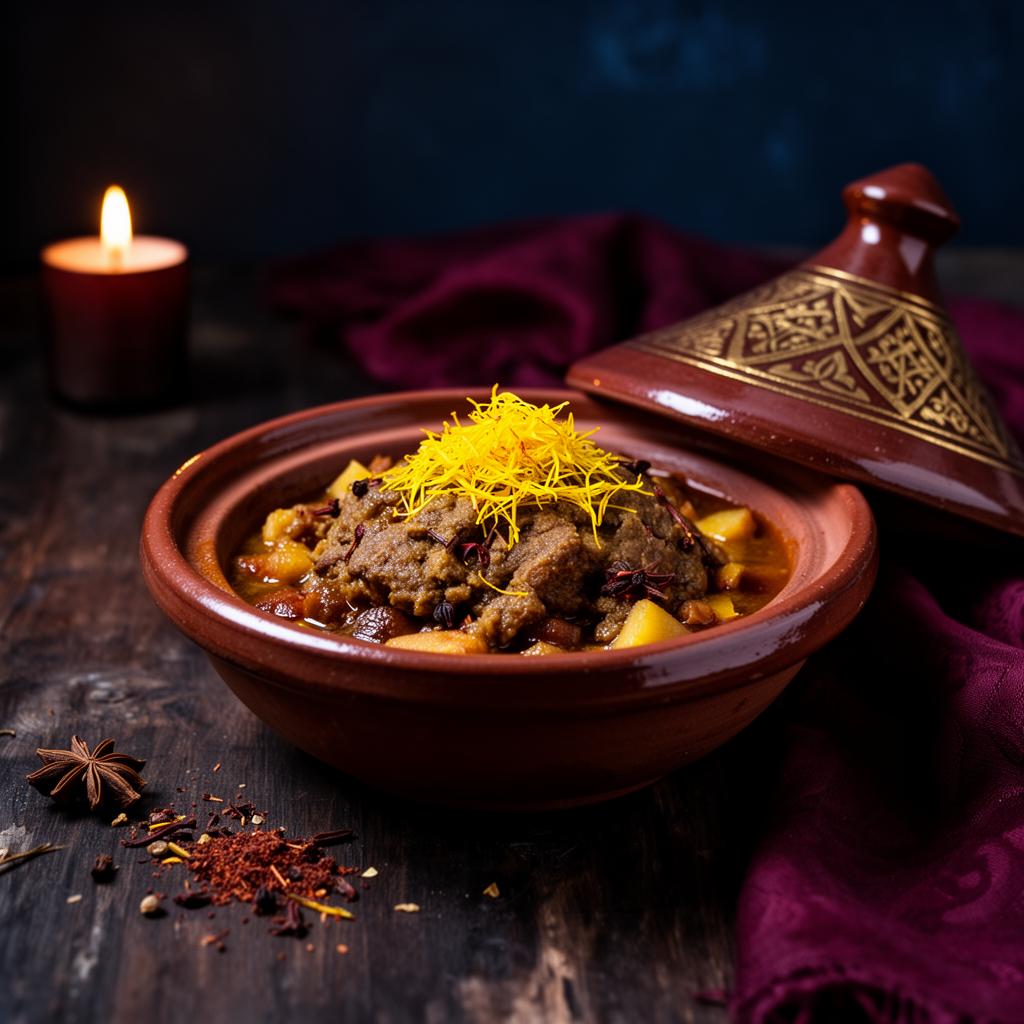
Fez el-Bali · Saffron stalls at the 11 o'clock light
The medina is not a maze. The medina is an instrument, and most visitors are looking at the wrong part of it. They are looking at the walls. The instrument is the air between the walls.
I walked the Fez medina for three weeks with a compass, a notebook, and a Moroccan friend who had grown up inside it. By the second week, the compass was useless. By the third, the notebook was almost useless. By the end, I was beginning to hear the medina the way my friend had been hearing it his whole life.
The first thing to understand is that the stalls are not placed where they are by accident. The spice stalls are at the rhythmic rests of the grid. The high-value stalls — saffron, argan, certain leathers — sit at the contemplative nodes. The everyday stalls — bread, vegetables, household goods — sit on the cardinal paths.
This is not folklore. You can verify it with a map and a colored pencil. Walk the medina, mark every saffron seller, and the pattern that emerges is not random. The saffron stalls cluster on a kind of golden mean of the grid, and they always have.

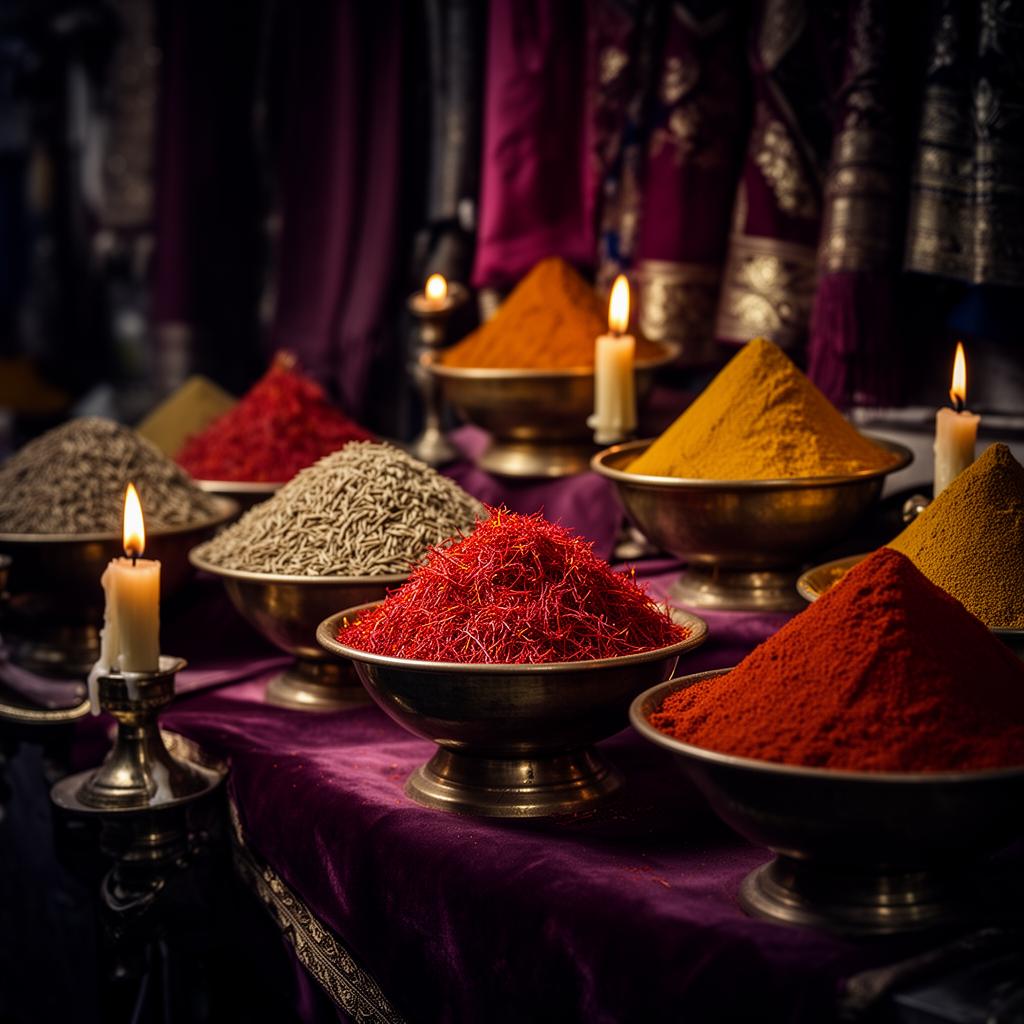
The spice cone, Fez. The geometry begins in the mound.
The reason, I think, is Andalusian. The same logic that governs the tiling of an Alhambran courtyard governs the placement of a saffron stall in Fez. The Moroccan medina is the inheritor of a North African mathematics that the Iberian peninsula lost when it expelled the people who carried it.
I want to be careful with this claim. I am not an architect or a mathematician. But I have spent enough time in both medinas and Andalusian palaces to recognize the same hand. The hand wants symmetry. The hand wants repetition. The hand wants the punctuation mark to land on the heavy beat.
Saffron is the punctuation mark. It is the most expensive ingredient in the medina by weight, and it is placed where the eye most wants to rest. This is not commerce. This is composition.
Walk further into the spice quarter and the geometry tightens. The cumin and the turmeric form a kind of low ostinato — they are everywhere, evenly spaced, predictable. The ras el-hanout vendors sit one cell apart, never two. The argan oil sellers — fewer, higher value — sit on the same rhythm but offset, the way a syncopation sits against a baseline.
Andalusian tiling above a date seller — the medina rhymes.
If this sounds like I am describing music, it is because I am. The medina is music. The composition is in the placement. The taste of the spice quarter — what you smell before you have bought anything — is the chord. The walk through it is the melody. The transaction at a single stall is the resolution.
What I am arguing, slowly, is that the medina is one of the great surviving sacred geometries on earth, and that most visitors walk through it as if it were a parking lot. We have been trained to look at the walls. The walls are the least interesting part. The composition is in the spacing.
I asked an old saffron seller in Fez how he had chosen his stall. He looked at me as if I had asked him how he had chosen his face. He had not chosen it. The stall had been his father's. His father had not chosen it. The stall had been his grandfather's. The composition had chosen the family.
Saffron in glass. The medina's punctuation mark.
This is the other thing the medina teaches. The composition is older than the composer. No single person designed this grid. It assembled itself, over centuries, from a set of inherited intuitions that the people who built it could not have articulated. They knew where the saffron went. They did not know that they knew.
The remaining 12 paragraphs are reserved for The Initiate readers.
BINA 369 is a serious editorial archive. The first 12 paragraphs are offered freely. The full essay — including the symbolic margins, source notes, and closing argument — is held inside the membership ring.
The full archive of 365+ essays unsealed.
Unlocks every essay, including this one.
The full archive of 365+ essays unsealed.
Recommended for serious readers.
Free 12 of 24 paragraphs · No advertising, ever · Cancel inside the ring